If you’ve read part 1 of this series, you know that earthquakes aren’t commonly mentioned in the Bible. If you haven’t, I’ll put the link to that here. We are looking at a weekend bookended by earthquakes, the weekend that Christ was crucified. The first was when He conquered Sin, and the Earth shook at the death of the Son of God and the rewriting of the covenant of relationship between God and humanity.
But to defeat sin, the enemy that has conquered every other human since the Garden of Eden, He had to submit Himself to the other enemy, Death. Death is perhaps the only foe humans acknowledge as ubiquitous. From the Grim Reaper of the Middle Ages to the more modern adage, “Only two things are sure in life: death and taxes,” people have spoken freely of Death as coming for all of us.
Without Christ, all humans live in an uncomfortable dichotomy brought on by the fall in the Garden: we long for the eternal while seeing death as our final destination. The Psalms are full of a longing for God to extend the psalmist’s life based on his inability to praise God after death (Psalm 6:5, 88:10-12, 115:17). Add to this Solomon’s declaration that God has put eternity into the hearts of man (Ecclesiastes 3:11), and you have a recipe for Death as the enemy that cuts us off from the thing we all deeply believe we were made for: eternity.
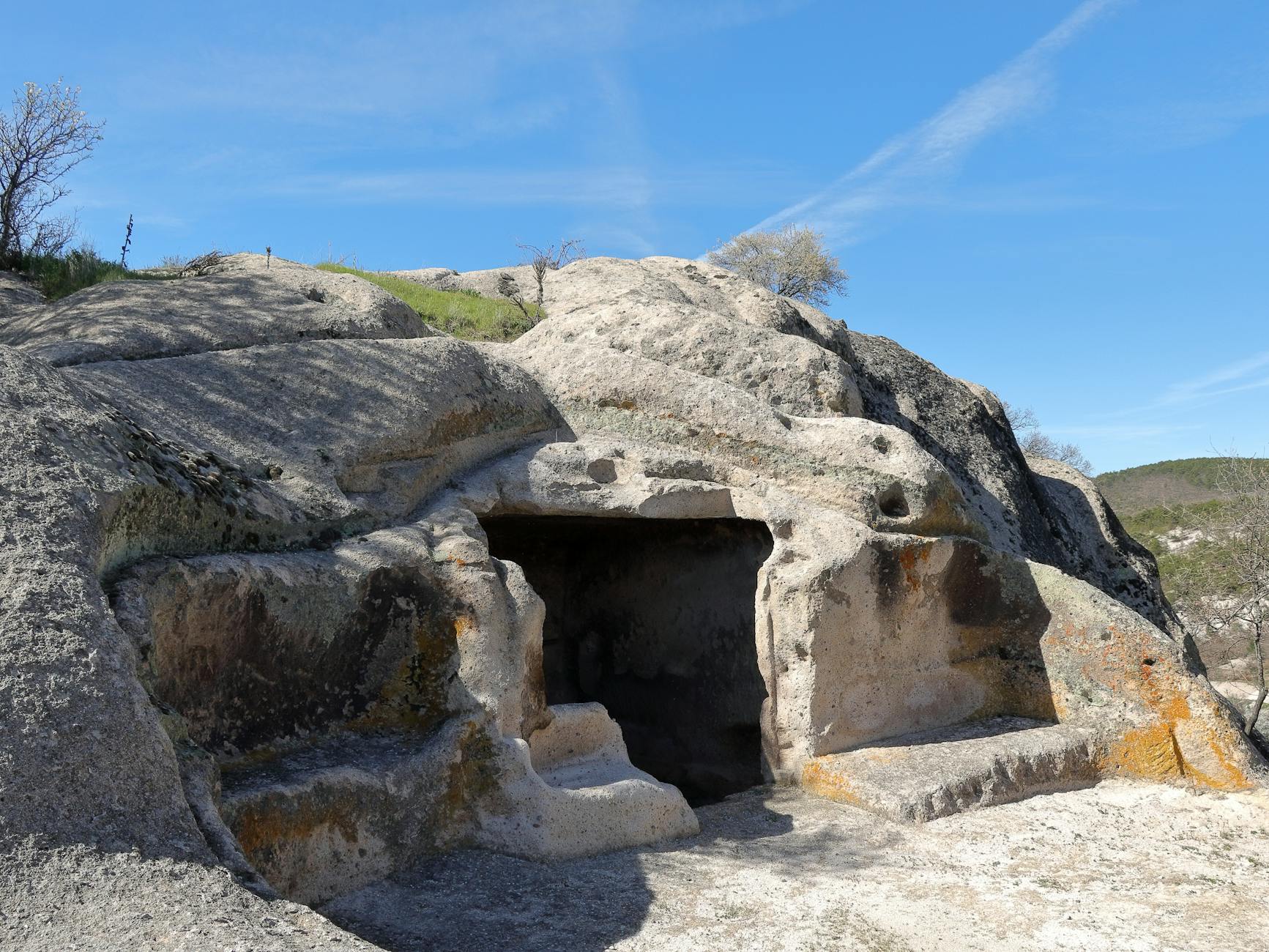
Jesus could conquer Death by living forever, but only by dying could He conquer Sin. So in a strategic masterstroke, He allowed himself to be captured by Death. He knew He would not stay dead, and He explicitly said this to His disciples (Matthew 16:21, 17:22-23, 20:18-19). When we get to Matthew 28, He makes good on His promise. “There was a violent earthquake, for an angel of the Lord came down from heaven and, going to the tomb, rolled back the stone and sat on it” (v. 2). The Greek wording of this verse implies a far greater earthquake than the crucifixion earthquake. While the crucifixion earthquake is described as the ground shaking and rocks breaking, Sunday’s earthquake is declared to be “megas seismos,” a great shaking.
This second, greater earthquake denotes that this second defeat is more meaningful even than the first. According to 1 Corinthians 15:26, “the last enemy to be destroyed is death.” This statement is both looking back at Christ’s death and resurrection and an eschatological prophecy looking forward to Christ’s final victory at Armageddon. First, Christ defeated death at His own grave, then He ultimately defeats death for all of us at the end of time.
1 Corinthians 15 is a dissertation on Christ’s resurrection and what it means for all believers. Death, Paul explains, is not final for any believer (v. 12-14). The proof of this is Christ’s resurrection, and His resurrection is only the beginning (v. 20). Jesus broke death’s finality by raising Himself from the dead, and “in Christ all will be made alive” (v. 22). Not only that, we are promised that we will have bodies when we are raised; we won’t be formless or ethereal ghosts (v. 35-44). So while our physical bodies still die, we will receive new, uncorruptible bodies at the resurrection (v. 53). Then Paul quotes two Old Testament prophets in unparalleled triumph: “When the perishable has been clothed with the imperishable, and the mortal with immortality, then the saying that is written will come true: ‘Death has been swallowed up in victory.’ [Isaiah 25:8] ‘Where, O death, is your victory? Where, O death, is your sting?’ [Hosea 13:14]” (v. 54-55). He ties it all together when he answers his own question. “The sting of death is sin, and the power of sin is the law. But thanks be to God! He gives us the victory through our Lord Jesus Christ.” (v. 56-57)
Death only had power over humanity because of our sin, and when Jesus conquered sin, He broke the power of Death as well. The disempowerment of death is not yet complete. We still experience it here and now, but we can rest in the assurance that death is no longer final for any believer in Christ. Those who have died in Christ have, Paul says, merely fallen asleep until the end of time, when they will be resurrected together with those who are alive. This, according to Paul, should inform how we grieve the deaths of those we love. “Brothers and sisters, we do not want you to be uninformed about those who sleep in death, so that you do not grieve like the rest of mankind, who have no hope.” (1 Thessalonians 4:13)
Death, which once was final and resulted in separation from God, has been defeated. It’s now a victorious transition into God’s presence, waiting for the fullness of time, when all who believe will be together again, and death will be destroyed once and for all. Revelations 20:14 says that Death itself will be thrown into the lake of fire. This final defeat of Death sets the stage for a victorious revelation of the new Heaven and Earth in Revelation 21:
Then I saw “a new heaven and a new earth,” for the first heaven and the first earth had passed away, and there was no longer any sea. I saw the Holy City, the new Jerusalem, coming down out of heaven from God, prepared as a bride beautifully dressed for her husband. And I heard a loud voice from the throne saying, “Look! God’s dwelling place is now among the people, and he will dwell with them. They will be his people, and God himself will be with them and be their God. ‘He will wipe every tear from their eyes. There will be no more death or mourning or crying or pain, for the old order of things has passed away.” He who was seated on the throne said, “I am making everything new!” (Revelation 21:1-5)
In those words lies our hope as believers in Jesus’ victory over our two greatest enemies, sin and death. He has risen, and He is making everything new!
Photo by Mustafa Aku0131n on Pexels.com


Leave a Reply